
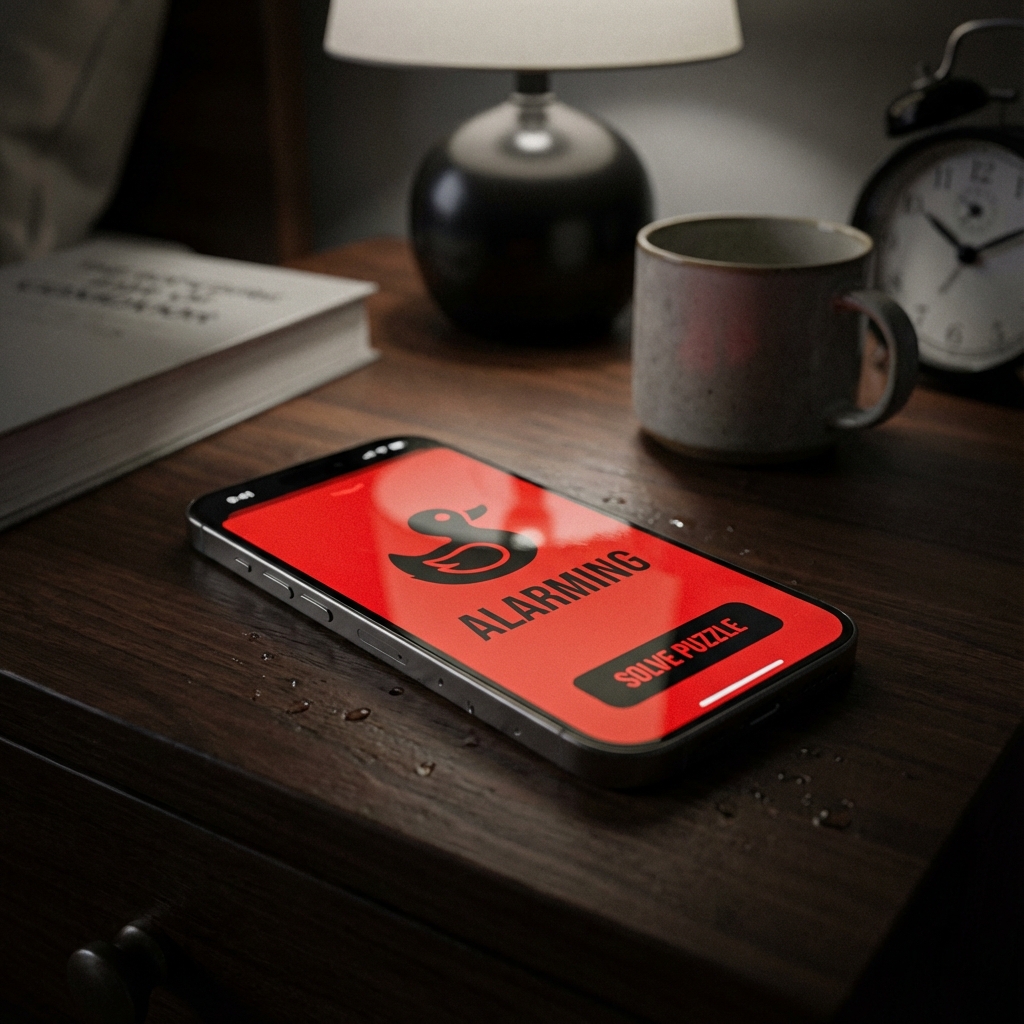
The Ultimate Guide to Conquering Sleep Inertia for Heavy Sleepers
If you are reading this, you are likely one of the millions of people who struggle to wake up in the morning. You set five alarms. You place your phone across the room. You even buy expensive sunrise simulators. Yet, every morning, you find yourself hitting snooze, drifting back into a fog, and waking up late, panicked, and groggy.
This phenomenon is not just "laziness." It is a biological state known as Sleep Inertia. And to defeat it, you need more than just willpower. You need a tool designed to hack your biology. In this comprehensive guide, we will explore the science of sleep, why traditional alarms fail heavy sleepers, and how the Ducking Loud Memory Alarm utilizes cognitive stimulation to force your brain into a state of wakefulness.
What is Sleep Inertia?
Sleep inertia is the physiological state of impaired cognitive and sensory-motor performance that is present immediately after awakening. Ideally, this state lasts only 15 to 30 minutes. However, for "heavy sleepers" or those waking up from deep Slow-Wave Sleep (SWS), this grogginess can impair your ability to think clearly for up to four hours.
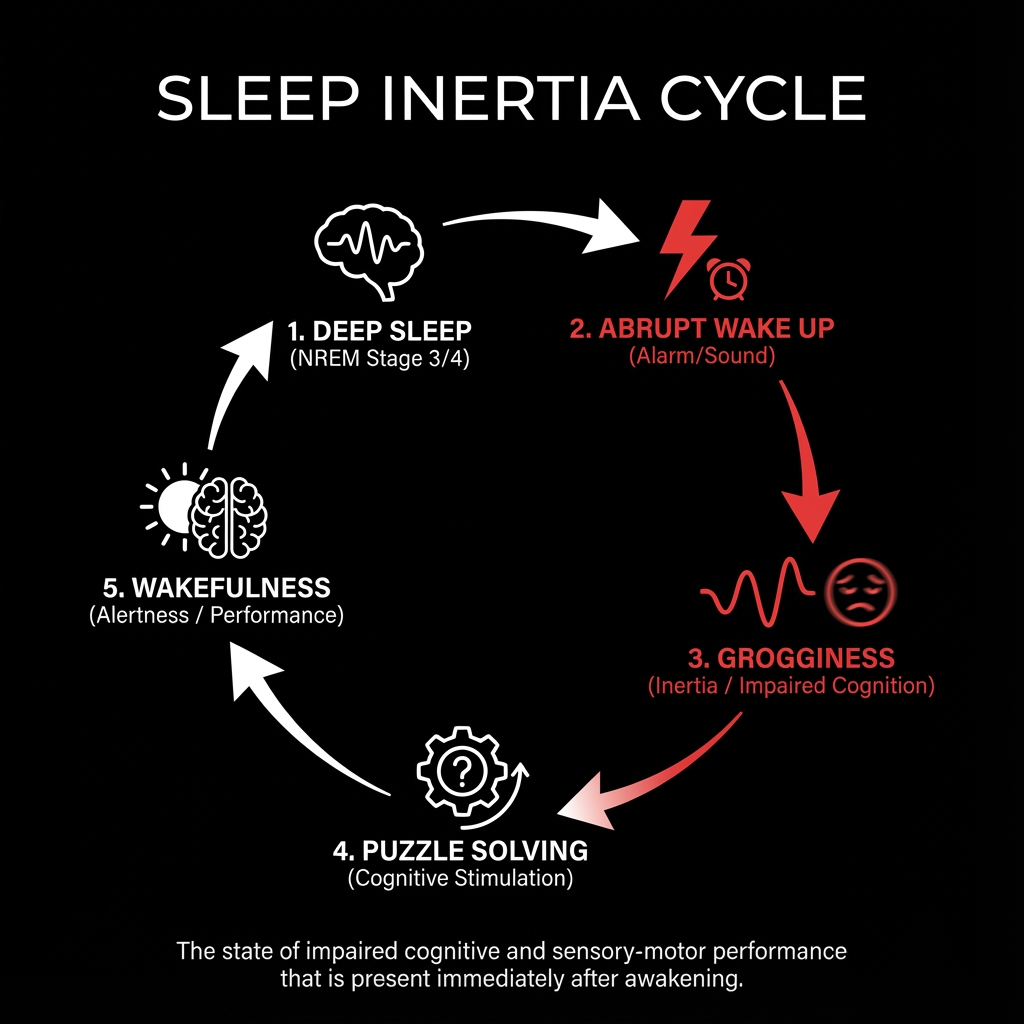
Figure 1: The Cycle of Sleep Inertia and Cognitive Intervention
During sleep inertia, your prefrontal cortex—the part of the brain responsible for decision-making, self-control, and logical reasoning—is essentially offline. This is why "Morning You" makes terrible decisions that "Evening You" would never approve of. Morning You thinks, "Just five more minutes won't hurt." Morning You turns off the alarm without even realizing it.
To break this cycle, you cannot simply ask your brain to wake up. You must force it to engage. This is where cognitive tasks come into play. By requiring a specific, logical interaction (like a memory puzzle) to silence an alarm, you bridge the gap between sleep and wakefulness, kickstarting the prefrontal cortex and dissipating the fog of sleep inertia.
Why Traditional Alarms Fail
Most alarm clocks on the market are designed for "average" sleepers. They play a gentle melody or a standard beep. For a heavy sleeper, these sounds are easily incorporated into dreams or ignored entirely. Even worse, the "Snooze" button is a heavy sleeper's worst enemy.
- The Snooze Loop: When you hit snooze, you fall back into the beginning of a sleep cycle. When the alarm goes off again 9 minutes later, you are interrupting that cycle, causing "sleep fragmentation." This makes you feel even more tired than if you had woken up the first time.
- Habituation: Your brain is excellent at filtering out familiar sounds. If you use the same pleasant chime every morning, your brain eventually labels it as "background noise" and ignores it.
- Lack of Consequence: If turning off the alarm is as simple as a swipe, your muscle memory takes over. You can silence the alarm without ever reaching a state of conscious awareness.
The Ducking Loud Solution: Cognitive Stimulation + Sonic Annoyance
The Ducking Loud Alarm is not designed to be your friend. It is designed to be effective. We built this app based on two core principles: Sonic Annoyance and Cognitive Verification.
1. Sonic Annoyance (The "Quack" Attack)
We didn't choose a duck sound because it's cute. We chose it because it is rhythmically irregular and acoustically piercing. Combining this with a high-frequency siren creates a "dissonant" soundscape that is nearly impossible for the human brain to ignore or incorporate into a dream.
According to psychoacoustic research, sounds that are unpredictable and erratic are more effective at capturing attention than steady, monotonous tones. The "Quack" sound varies in pitch and timing, ensuring your auditory cortex stays engaged and irritated—which is exactly what you need to wake up.
2. Cognitive Verification (The Memory Game)
This is the secret weapon. To turn off the noise, you cannot just swipe. You cannot just tap. You must solve a 3x3 Memory Matching Game. This task requires you to:
- Open your eyes and focus on the screen (engaging the visual cortex).
- Remember the location of hidden icons (engaging working memory).
- Match the pairs (engaging pattern recognition).
By the time you have successfully found all the pairs, your brain has shifted from "sleep mode" to "wake mode." The fog of sleep inertia has been pierced by the demand for cognitive focus. You are now awake, annoyed, but awake.
Tips for Heavy Sleepers
Using the Ducking Loud Alarm is the first step, but here are additional strategies to ensure you never oversleep again:
1. The "Across the Room" Method
Place your phone on a dresser or shelf across the room. This forces you to physically get out of bed to
engage with the memory puzzle. Physical movement increases heart rate and blood flow, further aiding the
wake-up process.
2. Consistency is Key
Wake up at the same time every day, even on weekends. This regulates your circadian rhythm and makes
waking up easier over time. Irregular sleep schedules are a primary cause of severe sleep inertia.
3. Hydrate Immediately
Keep a glass of water next to your alarm. Once you solve the puzzle and silence the duck, drink the
water. Dehydration contributes to fatigue.
4. Light Exposure
Light is the strongest "zeitgeber" (time giver) for your biological clock. Open your curtains or turn on
a bright light immediately after your alarm goes off to signal to your brain that it is daytime.
Frequently Asked Questions About Waking Up
Q: Why do I sleep through my alarm?
A: You may be in a deep stage of sleep (NREM Stage 3) when the alarm rings. Or, you may have "sleep
debt" accumulated from lack of sleep. Loud, varying sounds like those in Ducking Loud help break through
this deep sleep barrier.
Q: Is the memory game hard?
A: It is designed to be challenging but solvable. It's a 3x3 grid, meaning you need to find 4 pairs
(with one left over or a specific mechanic). It's not a math test, but it requires enough focus to wake
you up.
Q: Will this app work if my phone is on Silent?
A: Yes, the app is designed to override the silent switch if the app is open in the foreground (Bedside
Mode). We recommend keeping the app open and your phone plugged in for zero-latency awakening.
Conclusion
Oversleeping is a solvable problem. It requires the right tools and the right mindset. The Ducking Loud Memory Alarm provides the tool—a relentless, annoying, brain-engaging wake-up call that refuses to be ignored. The mindset is up to you.
Don't let sleep inertia steal your morning. Take control of your day. Download Ducking Loud Alarm today and experience the difference between "trying to wake up" and actually getting up.
Ready to wake up?
Download Now on App StoreTechnical Specifications and Privacy
Ducking Loud is built with native iOS technologies to ensure battery efficiency and reliability. Unlike other apps that drain your battery in the background, our Bedside Mode uses an OLED-black-friendly interface to save power while keeping the time visible. We respect your privacy—no audio data is ever recorded, and your sleep data stays on your device.
Compatibility: Requires iOS 15.0 or later. Compatible with iPhone. Mac: Requires macOS 12.0 or later and a Mac with Apple M1 chip or later.
Languages: English, German, Spanish, French, Italian, Portuguese, Japanese, Korean, Chinese (Simplified), Chinese (Traditional).
Age Rating: 4+ (Suitable for all ages).
A Brief History of Alarm Clocks: From Water Clocks to Ducking Loud
The quest to wake up on time is as old as civilization itself. Before the digital age, humans relied on nature, ingenuity, and sometimes, paid professionals to get out of bed.
Ancient Methods: The ancient Greeks and Egyptians used water clocks (clepsydras) that dripped water into a vessel. When the water reached a certain level, it would trigger a mechanism to drop a pebble into a gong. This was the first "snooze-proof" alarm—primarily because resetting it required refilling the water.
The Industrial Revolution and Knocker-Uppers: In 19th-century Britain and Ireland, "knocker-uppers" were human alarm clocks. They earned a living by walking the streets with long poles, tapping on customers' windows until they were awake. It was a reliable service, but it lacked the "snooze" option entirely.
The Mechanical Era: The first mechanical alarm clock was invented by Levi Hutchins in 1787. However, it had a major flaw: it could only ring at 4:00 AM, the time Hutchins needed to wake up for work. It wasn't until 1876 that Seth E. Thomas patented a wind-up mechanical alarm clock that could be set for any time.
The Digital Revolution: The 1970s and 80s brought us the red LED numbers of the digital alarm clock. These devices introduced the "Snooze" button, a feature that has arguably led to more lost productivity than any other invention. The radio alarm also became popular, allowing people to wake up to music or news. However, for heavy sleepers, soothing jazz or a low-volume talk show is simply a lullaby.
The App Era: Today, smartphones have replaced standalone clocks. But standard alarm apps replicate the flaws of their predecessors: easy snoozing and gentle sounds. This is where Ducking Loud represents the next evolution. By integrating gamification and sound design science, we are returning to the effectiveness of the "knocker-upper" (active intervention) combined with the precision of modern technology.
Detailed Breakdown of Sleep Stages
Understanding why you feel groggy requires understanding where you are waking up from. Sleep is not a uniform state; it is a cycle of distinct stages.
Stage 1: NREM (Non-Rapid Eye Movement)
This is the transition between wakefulness and sleep. It lasts only 5-10 minutes. If you are woken up during this stage, you might feel like you haven't slept at all. Muscle activity slows down, and occasional muscle twitching (hypnic jerks) may occur.
Stage 2: Light Sleep
Body temperature drops, and heart rate begins to slow. You spend approximately 50% of your total sleep time in this stage. Waking up from Stage 2 is generally easy and results in minimal sleep inertia.
Stage 3: Deep Sleep (Slow-Wave Sleep)
This is the most restorative stage, crucial for physical recovery, immune function, and growth. Brain waves slow down to delta waves. Waking up from this stage is difficult. If your alarm goes off while you are in Stage 3, you will experience severe sleep inertia—that feeling of being "drunk" with sleepiness. This is the heavy sleeper's primary enemy.
REM Sleep (Rapid Eye Movement)
This is where dreaming occurs. Your brain activity mimics wakefulness, but your voluntary muscles are paralyzed (atonia) to prevent you from acting out your dreams. Waking up from REM can leave you feeling disoriented or emotional, as you are ripped solely from a vivid dream world.
How Ducking Loud Helps: By using a "puzzle lock," the app forces your brain to accelerate the transition from the slow-wave delta state or the dream-like REM state into the beta-wave state of alert wakefulness. You cannot solve a pattern recognition puzzle with delta waves; the task itself demands a frequency shift in neural activity.